


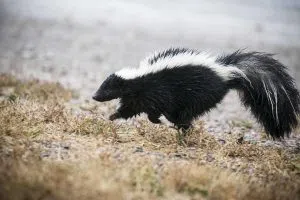
INDIANAPOLIS — The Indiana Department of Health urges residents to vaccinate their pets against rabies and to keep a safe distance from wildlife after skunk rabies was detected in two southern Indiana counties. Skunk rabies is normally present in northern Kentucky, but these are the first cases confirmed in Indiana since 2004. No human infections are suspected.
The rabid skunks were from Clark and Washington counties. The Indiana Department of Health is working with partners to determine whether other southern Indiana counties are affected. Hoosiers can help by reporting sick or dead skunks to the Indiana Department of Natural Resources Division of Fish & Wildlife Health Program at on.IN.gov/sickwildlife. Members of the public should not approach or touch skunks or any other wild animals, even those that appear healthy.
Rabies is a viral infection that is primarily spread in saliva through the bite of an infected animal. The virus isn’t spread through blood, urine, feces or skunk spray.
It is not always possible to tell if an animal has rabies just by looking at it. Animals with rabies typically act strangely; some may be aggressive and try to bite people or other animals, while others may act shy or be dull and unresponsive. Some rabid animals drool more than normal (“foaming at the mouth”), but this isn’t always the case.
Hoosiers can reduce the risk of rabies in people and animals by doing the following:
- Vaccinate dogs, cats, and ferrets for rabies
- Keep cats and ferrets indoors and dogs on a leash or under direct supervision
- Leave stray animals and wildlife alone
- Spay or neuter your pets to help reduce the number of stray animals in the community
- Contact animal control or law enforcement to remove stray animals from your neighborhood
If you believe that you have been exposed to rabies, immediately contact your healthcare provider. If you believe that a pet or livestock animal has been exposed to rabies, immediately contact your veterinarian.